



Transcript
This has been generated by AI and optimized by a human.
[00:00:00] Jess Video Intro: The power of data is undeniable and unharnessed, it's nothing but chaos.
[00:00:09] The amount of data was crazy.
[00:00:11] Can I trust it?
[00:00:12] You will waste money.
[00:00:14] Held together with duct tape.
[00:00:15] Doomed to failure.
[00:00:16] This season, we're solving problems in real time to reveal the art of the possible, making data your ally, using it to lead with confidence and clarity, helping communities and people thrive.
[00:00:28] This is Data-Driven Leadership, a show by Resultant.
[00:00:34] Jess Carter: Hey, everyone. Welcome back to Data-Driven Leadership. Today we're talking to Celina Wong, and she has made a career out of being the first data hire. She has built that function from zero more than once, actually four different times, and one of them was at a company that just a couple years later was acquired by Procter & Gamble.
[00:00:51] She did start coaching other data professionals on how to make the same jump into leadership, and the reason I was really excited to talk to her today was how much she loves data and understands from her variety of experiences at different companies, the different shapes it takes on in different organizations, the impact that has.
[00:01:12] And then we really did a focus on what does it look like to be a great partner to the data team, especially in the world of AI. So when data's at your fingertips, how do you make sure that you're pulling trustworthy, verified data, and especially as a leader, and not using AI in a way that skips over your data team and might make you walk into the executive room or the boardroom with a really pretty dashboard that doesn't actually say things that are correct or accurate.
[00:01:38] So we're gonna talk through this. It's gonna kind of feel like you're getting a coaching session from Celina, because you are. So you're welcome, and I hope you enjoy. Let's get into it.
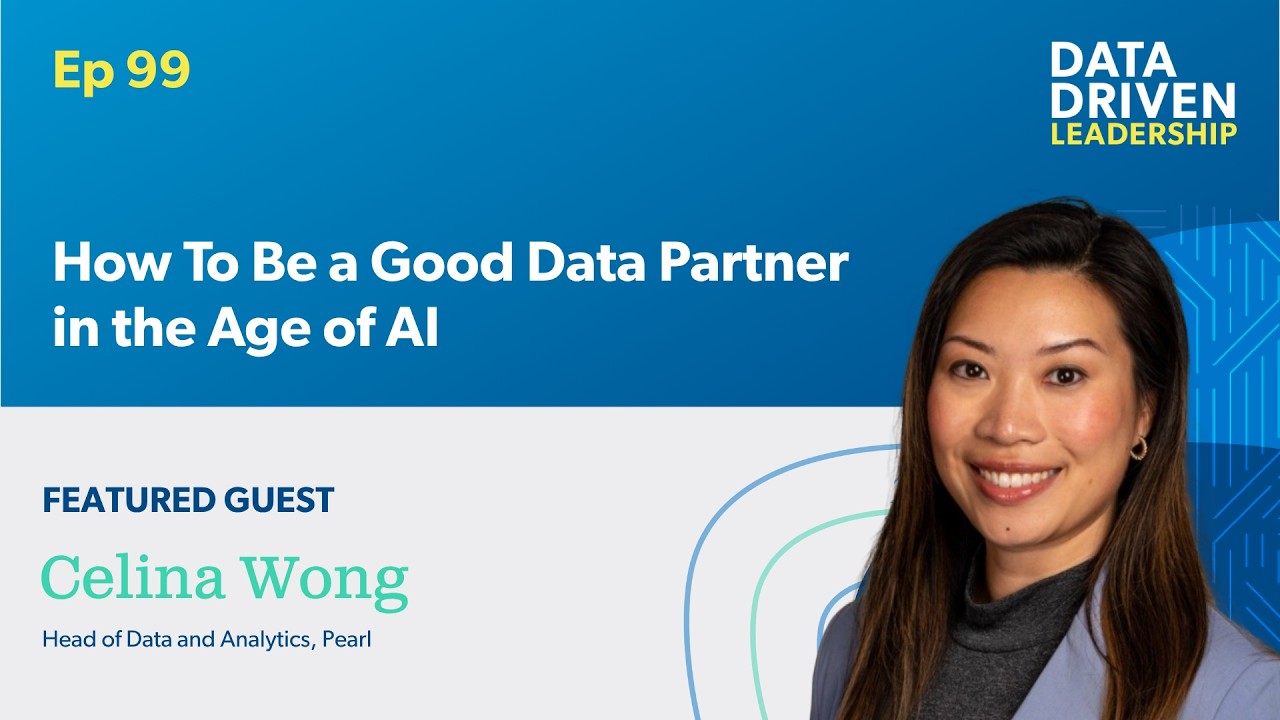
Welcome back to Data-Driven Leadership. I'm your host, Jess Carter. Today, we have Celina Wong, head of data and analytics at Pearl, a computer vision company focused on delivering AI solutions that elevate the global standard of care in dentistry.
[00:02:04] Let's get into it. Celina, welcome.
[00:02:06] Celina Wong: Thank you for having me. I'm excited to be here.
[00:02:08] Jess Carter: Ah, I'm so excited. So we're gonna jump in because I guarantee you we will run out of time. You and I are gonna be fast friends. So permission to jump in?
[00:02:18] Celina Wong: Please do. I think we're also gonna go over, but we'll see.
[00:02:23] Jess Carter: All right.
[00:02:23] Okay. So, one of the things I wanna ask you is when I look at your background, it seems like you've walked into four different entities as kind of the first data hire. So I'm really curious what has worked for you as, like, a playbook kind of, and what hasn't. What's the first thing you're doing when you're hired as the first data hire at a company?
[00:02:46] Celina Wong: Yeah. I think I'll start with, I was gonna start with what hasn't, but I'll start with the nice part. Right? What I've learned over time is to really stop and do the listening tour, right? I think at times when we've, I call it grown up in the data, technical, maybe analytical background, we have a tendency to just jump right in and dive in 'cause you wanna look at the numbers, you wanna look at the data.
[00:03:10] But as a leader or starting a function, the most important thing is to do what I call a listening tour, and you may have heard this before, but it's going to every functional head, including your C-suite, and I call it therapy for them, data therapy, right? When you join an organization, by the time they hire for a head of data, they're often pulling data on their own, complaining to each other about how things are off.
[00:03:36] It's the classic problem of what number is right, and then you spend 30 minutes talking about the right number instead of the, like, actual business decision coming out of the data. And so I call it data therapy listening tour because it's like, what is it that you are currently working on that are your key priorities and how it relates back to data?
[00:03:57] Because when I stepped in, in these four head of data roles, it's often, "Oh, the data's wrong," or, "We can't seem to get it right. Does anyone know where the right data is?" And we all know from working with data over time, turns out it's a filter issue because it ties back to a definition issue.
[00:04:14] And at times even if a organization is good at pulling data for themselves, every function is pulling the best version of data for themselves, right? Which is why one plus one seems to somehow add up to three or even four at times.
[00:04:28] Jess Carter: Uh-huh.
[00:04:28] Celina Wong: So I always say start with the listening tour. You don't have to tell them it's data therapy, although I get a lot of laughs from that.
[00:04:34] Because they ease up and, and start to tell you their pain points of what are you doing on a daily basis? How much time are you spending on pulling data, verifying that it's right? It also allows you, what I call a therapy, to build a relationship, which is my point number two. In the world of data and tech, I often find we just jump right into solutioning because that's how our brains work.
[00:04:58] But in order to build the right outcome and solution, you actually need to have the nuances to what is the issue, and people don't really get into the nuances if they don't have a relationship with you. It's not because they're trying to hide something, it's just because they've got ten other things going on that day.
[00:05:16] Data is one, you know, two things on their list. But in order for you to be top of mind for them, they have to remember that they had a great conversation with you and you're delivering small wins for them. And also, you know, one more thing. Remember when we talked about, you know, like, how we report on who gets what lead source?
[00:05:36] Well, here's the issue that we're finding, right? And that's where you actually get to the real outcomes they want versus, oh, you want a report by lead source. That seems easy enough. Turns out they already had that. The issue wasn't that. The issue was the nuance of how they're attributing it, how the data's being captured.
[00:05:55] So one is, you know, listening tour, that data therapy tour, building your relationships. And number three, this is where you get to dive deep, which is understand how the company makes money and spends money. Especially how they make money, very much tie back to their OKRs. If they don't tie back to their OKRs, run for another company.
[00:06:16] But, like, if their OKRs don't tie back to how you make money, then, then what are you doing? What's this company doing? I often say that because, I mean, for me, I come from a finance career and joined data. And so I come into a company ... Even before I join the company, I like to ask, like, what, what are your revenue levers?
[00:06:36] Where are your big bets this year? You know, this is how you know the company is doing well, what data you should be looking at and pulling so that the work you're doing isn't this, like, on percent of the business. It's actually driving 50 percent of the revenue growth that we're expecting to see. This is what puts you on the map versus some data person that just joined and is fixing something in the background that nobody seems to care about.
[00:07:02] Whereas the thing you deliver actually help drive revenue. It puts you in the revenue seat instead of data teams are often sitting in this cost center and viewed as a cost. Like, how do you center yourself back to we're driving revenue growth?
You say that you go on a listening tour, and then you start to iterate on those priorities. And the things that don't work are sticking, you know, too closely to that list, because if you're at a startup, by next week, that priority's gone.
[00:07:47] Way out the window. And I think that that means, you know, the things that don't work are not going back. You think listening tour is a one-time thing. It's not.
[00:08:05] Sometimes, you know, I hear this all the time. I've experienced it. Certain department heads are just not as data-driven. Everyone says they are, but you'll always find those folks at the organization that are a bit less data-driven but speak with so much gut confidence, and you have to find the liaison.
[00:08:24] Your listening tour may have been them, but you actually have to find someone within their organization that actually is pulling the data for them and speaking with them on a day-to-day basis of what is your organization really looking for, and what's the problem? Because the leader you know, says one thing, but it's not true.
[00:08:42] As data, you know, leaders, data folks, we have a tendency to see things more black and white. The other things I've done in my first few roles, jump right into the data landscape and only care about that, but didn't know how to tie it back. I think all of us have gone through that motion of, I know the whole data warehouse back and backwards and forwards, but I have no idea if anybody cares about what I'm saying right now.
[00:09:24] Jess Carter: It's really interesting that you just said that too, 'cause the finesse piece really, it resonates with me. I'm at a startup now for the first time, and so what you said was just preaching. And I think part of this too is, like, there are, um, different levels of maturity. So we're, like, an early stage series A, so it's like some departments have OKRs, some departments are developing those, right?
[00:09:43] Which is reasonable. My question for you might be like, what do you anchor to? 'Cause in that whole finesse where it's like people are saying something really confidently, but you walk into the next room and try to parrot that and people are like, "What are you talking about?" The reason I run to a P&L or a really strong finance leader is because there is truth there.
[00:09:59] The board is getting a message and that message better be right. The investors are getting a message and it better be right. The customers are getting a message. So I tend to anchor to what is the current reporting capabilities in those spaces and what do you guys wish you could do, or what are clients asking for, or board members asking for that you can't do yet?
[00:10:15] But to your point, you kind of become this true therapist or facilitator that helps the rest of the business. There are certain things they want, but tying it back to why do you want that and how is that connected to how we make money, and is it not connected? So to me, you correct me where I'm wrong, part of this isn't you being right.
[00:10:33] It's helping the other leaders ask for the right things, and maybe the first ask isn't the right one. Is that fair?
[00:10:40] Celina Wong: Totally. And welcome to startup world because is that finesse translates into everyone has a little bit of I don't know what I'm looking for, and you turn from therapist to educator, right?
[00:10:55] Like, I hear what you're saying. And now let me educate you based on what I'm hearing from everybody else. You know this to be true. That's why my role right now is interesting in the sense that it's evolved from I've always been doing it, but now it's including this revenue operations piece and business operations piece to it that we all as, as a good data leader do, which is it's not just about a clean data warehouse.
[00:11:21] It's not just about, you know, oh, here's my metric definition. You also become this interfunction operator where you're educating other people on, to your point, you walk into another room, you're talking about some initiative that someone else just said is top priority, and that anchor, also to your point, is on the P&L, the OKR.
[00:11:41] What are we promising the board? What are we trying to deliver to our consumers? And you walk into another room and they're working on, you know, the idea of bike shedding. Everybody's working on the foundation. They're bike shedding over here. And they don't know that 'cause they think they're also building the foundation of the house.
[00:11:56] And you become that educator by asking questions of, "Oh, did you know that this initiative was going on? How is that tied to it?" And this has nothing to do with just data. It has everything to do with finesse, business operations, tying different departments together because the data function also sits in this umbrella organization, which is why I think a lot personally about where data teams sit within different companies.
[00:12:25] I often see patterns of how they fail or succeed just because of the organization they sit under and the context they have. I mean, we're all talking about context window, but I think that it pertains to data teams even way before this AI stuff came along. I'm like the amount of context that's sitting in our windows and what we have to share because someone else's window just overlaps a little bit with our window, but we get to see across multiple windows because I now have 50 tabs open too.
[00:12:53] But-
[00:12:54] Jess Carter: Right ...
[00:12:54] Celina Wong: you become the translator. You're the glue that people don't know you need.
[00:13:10] Jess Carter: Where should data sit in an org?
[00:13:16] Celina Wong: The shortest answer is whoever is driving the most amount of revenue. And if that's equal amongst all, then it's the COO, the CRO, the CEO. I've been under finance. I've been under marketing. I've been under operations directly with the CEO or been the CEO of a company. The worst, I think, is when you're tucked away in some
[00:13:36] And others out there will argue with me that-
[00:13:39] Jess Carter: Sure ...
[00:13:40] Celina Wong: I often find data teams under the CTO. And my take on it is if the CTO is heavily focused on putting things to production but not having a commercial lens to something, your data person might find themselves in this weird space of how do I drive strategy across other departments if I'm only focused the tech or the product.
[00:14:07] And I often say the application of it, the operational, operationalizing your data, not just the infra.
[00:14:14] Jess Carter: What do you do when you start at a new firm and everybody thinks they know what the first data hire should be doing, and they may not be right?
[00:14:47] How do you manage kind of building trust fast, demonstrating that you can deliver, but that doesn't always mean that what they thought you should do is what you should do?
[00:14:57] Celina Wong: I think it was harder in the first two roles. Once you were like, "This is my third time doing it," you get a little bit more credibility, especially
[00:15:06] when, like, of the first two, one was acquired, and then over time you're doing it and, you know, and you're finding success along the way. There's less of, of like, "Well, you should do this because, you know, you've never done this before." But putting yourself in, putting myself in the shoes of the first two times, I talked about the listening tour and talking to every single function, right?
[00:15:29] It's also this forcing function of bringing all those people back together and showing them what everyone else asked for, 'cause I bet they don't even get to see what their counterparts asked for. We're prescriptive. When we come back, we're not like, it's not a democracy. How do you all rank this? It's this is how we ranked it in accordance with talking to our C-suite.
[00:15:49] It was the closest…they get the final call, right? Like, if someone from another function just says, "I don't agree with that," that's fine. Take it up with the C-level team, because this is the prioritization that we've come up with. We welcome your feedback, but this is what we prioritize based on, to your point, the company's growth levers, what's promised to the board, what's promised to the street.
[00:16:11] Like, that's what we have to drive towards. But I think it's eye-opening for all the other leaders to see, like, oh, I didn't even know HR used data and asked for this and this, but it's not being prioritized, but that's a interesting ask. It also allows other people to see why they're deprioritized. Because they're like, "Oh, that makes it, that makes total sense.
[00:16:31] Of course, you should focus on sales right now and how our funnel is doing. And then we'll come back to my ask because that's what keeps the lights on, not the thing I asked for. So they almost deprioritize themselves without you having to fight them. It also allows the data person, I think this is one of the hardest things as data leaders is fighting for resource, especially nowadays with AI can do everything.
[00:16:56] That allows everyone to see how much lives in your backlog.
[00:17:00] Jess Carter: Yeah.
[00:17:01] Celina Wong: And then you're one person starting a team, or you've got an existing team, but your plates are full. It allows everyone else to go, "You need more help," instead of you being the only person shouting, "I need help."
[00:17:14] Jess Carter: One of the things I'm really curious about, just the other side of this conversation, which is if you were talking to all of the other leaders that are not the data leader, and you're the data leader, I'm the other leader.
[00:17:33] I wanna be your best friend because I do want my data, and I kinda want it first. And so when it's not first, I understand why. What are some pieces of advice you might give to those other leaders to be like, "Here's how you are the best partner you could possibly be to your data leader"?
[00:17:50] Celina Wong: Oh, yeah.
[00:17:51] I mean, the thing about best friends, that definitely happens. I think when folks become data leaders, they don't realize how people start to come towards you, and you're like, "What do you want?" And you know, at first you're like, "Wow, you're really nice." It's like it’s part of trying to be your best friend and get in front of that line and move themselves up the line.
[00:18:07] And if you call them out, they're like, "Guilty! But still, here's my data." It's a really good question of how to tell them how to be a better partner with you. When they ask me for something, my response is, "Which OKR is this tied back to? If it's not, what new initiative is this related to?
[00:18:27] What's the revenue impact of this?" I find people get tripped up on that question alone. Like, how much money are we gonna derive from this initiative? And…crickets. And these are in many ways a forcing function of is it really that important? Is it really that important or were you asked for this and now you're passing that along versus this is something that's gonna drive revenue.
[00:18:50] And I focus on revenue because startups focus so heavily on revenue. But you could be hitting, focusing on a cost side of things too. I think the best data leaders also don't require everyone to just fill out a Jira ticket because not everybody knows what the requirements are.
[00:19:08] It's your job to translate that. I can tell you, is this a low, medium, high technical effort? Again, best guess. We always know it starts to bleed into higher effort than expected. But on the business side, we're like, "You need to tell us how much lift this will give the business." I can't have a high effort technical lift that brings low amount of business impact.
[00:19:30] You could put this on a chart and you'll instantly go, that quadrant should be dismissed or deprioritized.
[00:19:35] Jess Carter: Right.
[00:19:36] Celina Wong: That's why we ask for what is the business impact to this? It's revenue impact, cost impact, time savings, because, you know, at many companies before you join as a data person, I find that I'm automating things, too.
[00:19:49] Like, that's a big win that people don't think about, that you're saving time and that that person's time gets redirected to some higher level of impact. So I'm like, that's...That time saving and revenue impact for another project counts towards this. We often think just directly on this initiative alone.
[00:20:08] Jess Carter: Right.
[00:20:08] Celina Wong: But I force them to think that, and it goes both ways. It makes the leader go question the person that asked them the question, 'cause you'll often find that as you do this over and over again I will ask them, "Did you just come out of a meeting? Because I just got the same question from five different people."
[00:20:27] And I would like you to question the person asking. A junior person will fulfill five requests, right? A senior person, or a perhaps in the middle of your career, you would fulfill maybe one or two of them and tell everybody else the same answer. And in a senior position you go, "Do you know why you're asking this question?"
[00:20:44] And then, and that same question goes to those five people, right? So that it's, are you clear on what you're being asked for? And then we'll deliver it, but if I'm not clear, then the outcome you get is not clear either. So a good partner is someone who's crystal clear on why they're asking this and what action are you gonna take from it.
[00:21:01] When I coach people to go through this motion, they ask me, they're like, "But Celina, I feel like I'm just a jerk because I'm asking why, and I might seem like I'm deflecting work." And I said, "No, there's a finesse, again, to how you ask those questions." Like-
[00:21:15] Jess Carter: Yeah ...
[00:21:15] Celina Wong: if you give me more information, there might be things that I'm seeing in the data that you're not even asking me in this moment.
[00:21:21] Right. But I'm gonna provide you subsequent insights to back up whatever you're looking into, right? An example of that is, like, when I was at Tua, for example, one of our, a big success when it came to acquisition, some of the things that people were asking me for were how many consumers bought, you know, our Eye Balm.
[00:21:40] It's like a swipe top product, right? And that was just the question. How many people bought this product in the last two weeks? And I'll go back and say, "Well, can you tell me more context on why this question came about? Are we trying to launch a new product? Are we trying to pair products? Are we trying to launch a collaboration?"
[00:21:57] Jess Carter: Right.
[00:21:57] Celina Wong: All those questions and answers will tell me when I look into the data, when we're gleaning insights from this, it's not just about sales of this product from the last two weeks, it's sales of this product that have been bundled with other products. What can you tell me about the consumer segment?
[00:22:13] Is this collaboration gonna work? Because perhaps that influencer doesn't have the same segment that actually does well with that pairing. And that I think is a much richer experience between the data team and, and the whole business and the outcome we're looking for versus-
[00:22:29] Jess Carter: Yeah ...
[00:22:29] Celina Wong: what I call this ping-pong effect.
[00:22:32] You ask what's different about us and Google Search or, like, a simple prompt. How many customers? This is the answer. No, I was asking this. This is the answer. Then you're very robotic and transactional versus what we all strive for, which is a strategic thought partner, which then translates to the tactical of things of, like, what are you actually trying to do?
[00:22:54] Let me help you think through that.
[00:22:55] Jess Carter: Some of this might be me saying it back to you, but I think it's really important. Because sometimes in my career if I'm not the data partner, which I have been on both sides of this, you know, I'll put in the most beautiful data request, and then they still want a meeting.
[00:23:11] And I'm like, "But I did a good job." And it's like, okay, but, but they want more context. Because they are a steward of that data, and they understand that there might be context I didn't think to provide that would give them a completely different result to me instead of filling my data request. And then I'm like, "Oh, that makes me wonder this."
[00:23:28] And then they're filling two data requests instead of just having a conversation first. So sometimes this reminds me of when I work with engineers, app devs, where one of the first things I ask them are ... I've met excellent developers who love to just dev. They don't wanna design. They want perfect requirements and to be left alone, and they wanna code.
[00:23:46] And I've met developers who are amazing, and they want to be in the room where it happens. They wanna help influence the design and then dev it. And part of that is then they know that it's enough. They know they have enough information to go dev it. Both of those are okay. The former requires an excellent requirements person who gives them enough information to go put their headphones on and code, right?
[00:24:06] I think that data teams are the same way. Like, there's a little bit of, like, it depends on how good the ask is and how accurate and informed it is whether we need to have a quick meeting or answer a few more questions. Or hey, maybe it's just so unique that it just makes sense to get in a room first.
[00:24:20] But I think you can build maturity either way. It just helps to have these frameworks to be like, "Okay, what does success look like here?" Does success look like the data person wants a great request, and then you're gonna build a beautiful field and formats in a Jira request for a data? Or do they really like to be one of the designers and they're gonna want a little more context?
[00:24:39] And I would argue neither is wrong. There's just, we have to figure out what does success look like for the unique needs of the business. Is that fair?
[00:24:47] Celina Wong: Oh, it's more than fair. Okay. We don't sit down to think about that delineation enough because we often swing in one direction or another.
[00:24:59] And I think when, when people have that sentiment of, "Ugh, I have to put in a request, and then I gotta take a call, and then da, da, da, da, da", it, it also speaks to the relationship part that I was talking about earlier. You know, if you have a lot of fun with your data team, right, which is what I strive for.
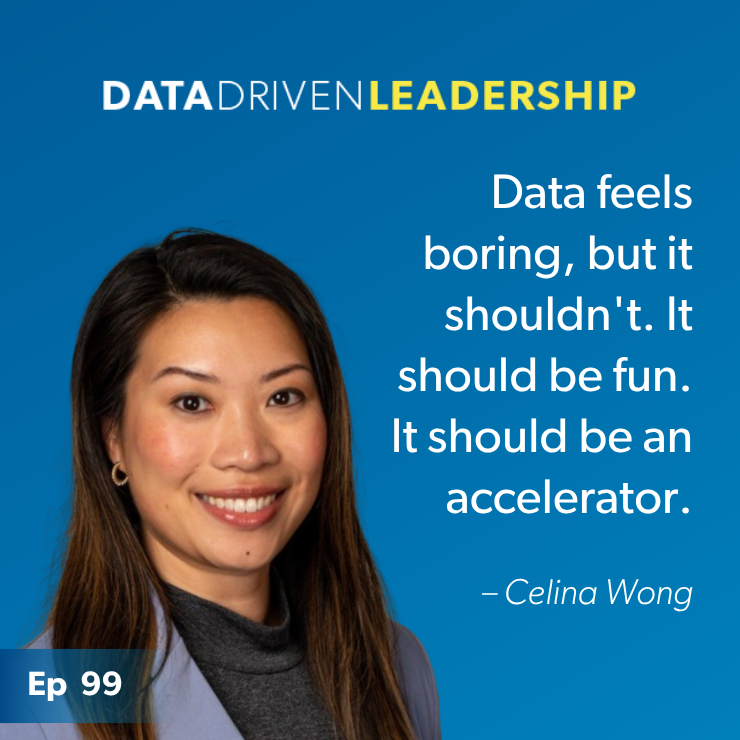
[00:25:18] I'm like, data feels boring, but it shouldn't. It should be fun. It should be an accelerator. It should be, I'm excited to go talk to them because they're gonna give me new ideas, not, ugh, I'm just reading off this ticket to them and just saying a couple of more words that I just, you know, the ticket didn't even have space to write for.
[00:25:35] It's a bit of the talent you're working with, the leadership you have in place, teaching people to become that translator or that fun partner that I'm describing. But you're right. If your talent is I just wanna be this, like, dev person that just codes all the time, then you need the layer of let me be that translator.
[00:25:57] Let me be the translation from what do you need to perfect requirements, right? And that's why I think a lot about data team design, because you're not gonna find that person that's excellent at coding and an excellent translator. It's rare. They exist, but it's so rare. And when it comes to building a data team, you have to find that composition, to your point, of the PM-ing layer, if you will.
[00:26:23] Since we're talking about tech, it's like the PM-ing layer, and then all your dev folks, right? And rarely do you find the person that does a great job of PM-ing and dev, and I think the world asks of that of data folks, but we don't, we don't all live in that stream. And as a data leader, I think about my team composition a lot, of whose strength is the I'm excellent at coding and I'm gonna get distracted if you ask me a bunch of questions and you're not well-defined.
[00:26:51] And then some people live so...They actually thrive in let me be that thought partner with you and help you design the requirement. They don't wanna be told what to do. They wanna help you. Like, they wanna design with you, and that makes them, that makes them shine. And so yeah, I think there's a lot of, like, org design to it as well.
[00:27:10] And, and then, like, how do you sprinkle in fun? Like, I, I'm like, we all work so much. How do you add a little bit of fun to it instead of can you provide this report for how many people have signed up for this?
[00:27:21] Jess Carter: Right. I think people underestimate that. And this was something else I was gonna ask you, too.
[00:27:25] So you brought up Tula, which did that get acquired by Procter & Gamble? Is that right?
[00:27:30] Celina Wong: Yeah. It was a very fun ride, especially because I joined two days before the whole world shut down for COVID.
[00:27:40] Jess Carter: Okay. Wow. So…and when did it get acquired?
[00:27:45] Celina Wong: Post-2020, so…
[00:27:48] Jess Carter: So a year or two.
[00:27:49] I know. I know. Yeah.
[00:27:50] Celina Wong: Well- Yeah, it actually got acquired very quickly within two years of me joining
[00:27:54] Jess Carter: I was gonna ask you about…I've been in the data room, right, during an acquisition. And if people don't know what that is, it's like where you kind of agree on what data is gonna land in a fake room, a digital room where you have limited access where people can get in and look at the data about who they may acquire or be acquired by.
[00:28:10] And putting that data together is a lift, let me just say first. Like, that is a huge effort that no one in the business is really allowed to know about, but it's happening, and it's just so stressful, which is also hard when the rest of the business is asking you for data and you're like, "I kinda can't get to it, but I also kinda can't tell you why."
[00:28:26] So one of my questions is, and I think, again, you got to it, what does it look like to put that together? But also, what does it look like to help the business understand what's important from their data? Like, you used that example, and that's where I'm like, when you walk in at a certain level and you're asking people, "How are these data requests tied to your OKRs or tied to your revenue?"
[00:28:48] It's because that's the data that's gonna go into your room. That's the acquisition-level data. And if they're asking for transactional data that isn't tied to revenue or an OKR, and then you get to a potential acquisition, it's a way bigger lift to try and demonstrate value. Is that a fair summary of how you approach some of this?
[00:29:09] Celina Wong: Yeah. It's truly a focus of how if you were to put yourself in the shoes of someone, you know, simply investing, buying, right? Like, they're looking at what is your trajectory, right? Your point, if you're focused so much on transaction or, datasets that are sitting out there but aren't moving the needle, you've just spent a lot of time on what's not contributing
[00:29:33] to the bigger picture, right? Right. When it came to the data room, it really came down to, like, cohorts and forecasts and scenario planning and having all these different layers of understanding what your consumers are doing. I think- It seems so intuitive when we're sitting on a data side, like, "Oh, of course, we would want to get to the customer data and what they're buying and their interactions."
[00:29:57] If you're a SaaS product, what's the product utilization? If you're a physical product, like how many of each unit are you buying, right, and the unit economics of it. But when a data person isn't in the room and there hasn't been an investment in it, it is actually really hard to get to, especially when you're under pressure.
[00:30:14] When I was working on that deal too, I mean, I think one of the biggest compliments I remember hearing was the investment bankers who work on this deal with you. They're like, "You know, usually we're the ones having to piece together this data, and it takes us several weeks to get it together because we ask for the raw data, and we have to put everything together to paint the story of what's going on at this company."
[00:30:36] Jess Carter: Yeah.
[00:30:37] Celina Wong: But here you all have it readily available, and you know, at the time I was building in Looker, right? And now we have so many other products that have built a, built much even better products out there. But at the time I had Looker, and I said, "Yeah, do you want that? Okay, I can send it and email it to you.
[00:30:52] Do you want it in your inbox at 6:00 AM? Great. Done." And they were, they were highly impressed. They're like, "You have this ready to go?" It, it expedites the time that you're getting to the financial outcomes and scenarios that they have to showcase. It also shows that you have a great handle on understanding your customers and the investment decisions you're making internally, right?
[00:31:17] Because we, for consumer companies, there's only so much you can spend on paid media, and that's often your biggest ticket, you know, budget item. So if you can understand how to piece together all the data to say, how did you drive certain cohorts? What are certain cohort health? And not just showing the data, but the explanation of not every cohort's gonna do well.
[00:31:38] So how did you discuss, you know, what didn't go well? To your point, like when you join a company, what didn't go well? You have to assess what did not go well, what are we gonna pull back on? What do we have to fix? What did go well? What can we multiply and do more of? And that's how data and business impact and iteration tying all the way up to acquisition comes together because it just makes the company look very put together when-
[00:32:04] Jess Carter: Yeah
[00:32:05] Celina Wong: you already have the data that they were gonna put together.
[00:32:09] Jess Carter: Oh, a hundred percent. If you can work all the time assuming that you're 18 months or less from an acquisition, I think it makes it a lot easier to anticipate and be prepared when that acquisition comes. Like, you can handle it if you're not paying attention, but it is a, it's an Everest to summit versus a small hill at the end of your neighborhood if you're just constantly living and working and indexing your data in a way that you think is basically, for lack of better words, acquisition-ready.
[00:32:34] Like, if you kinda think that way, I think it makes life a lot easier for your team, too. And speaking of team, I am curious if you were talking to other people who've just taken a data leader role. Maybe they're stepping in from individual contributor to manager or manager to leader, and now we're surrounded, we're drowning in AI.
[00:32:52] What advice would you give your peers that are maybe newer to this role than you are?
[00:32:59] Celina Wong: I think in this world it's become ... It's like everything. It's become both a strength from the perspective of even in this role that I've jumped into, I've leveraged AI to catch me up on context.
[00:33:12] There's already complicated operations happening that is changing the way that our data structure is. And in order for me to catch up very quickly, I've used AI to comb together all the different contexts so that I had a starting point to discuss different projects, different initiatives. In the past, that would've taken more months to just onboard yourself than it does today with AI.
[00:33:34] I mean, I remember within my first week I was jumping into Snowflake and assessing what are all these different tables for? When was the last time they were updated? Where are they coming from? Where are they outputting to, right? Like, these were things that would've taken us, you know, weeks if not months to-
[00:33:50] wrap our brains around. And now I have a starting point. I'm not saying it's right, right? 'Cause as a new person, you should always question if AI's context is correct because things can happen in private conversations you're not involved in, and you're missing a huge context piece there.
[00:34:07] Jess Carter: Yes.
[00:34:07] Celina Wong: But I think it gives us a huge boost to jump right in and to dive right into, is this what you're seeing?
[00:34:14] And asking your counterparts those questions. The downfall I've seen is, and I'm seeing the same thing, there's so much AI-slop out there, right? Yep. We are now in this cycle of the hype to the slop to the token maxing to the minimizing. And we're in this, like, in this wild oscillation and whiplash, if you will, of like-
[00:34:36] everybody AI. And with data, I'm finding that we had gotten to a place where data governance was, I think, fairly stable is the best way I can paint it. Where, you know, some people might view it as, "Oh my gosh, the data team is, like, gatekeeping things." But at the same time, you're also delivering quality insights, quality reports, stamp of approval.
[00:34:59] And now it's having to figure out that process all over again because everyone gets to connect to the root source. They might even connect without you knowing. And they're reporting on things that you have no governance over and no understanding of when they pulled it, what cadence, what connectors did you put in, and now they're making decisions off of this.
[00:35:18] And I think that's the hardest part now for rising leaders is getting a handle of...that's why I think the listening tour and relationship part's really important, is what is everybody looking at? When you report on measuring those OKRs, what are you linking to? Has the data team taken a pass at this?
[00:35:36] Like, is it right? And building that confidence of you need some sort of check, and not just assuming Claude did the right thing, right? Depending on whatever AI you're using, I think there's a lot of, like, confidence that's currently given to whatever AI you're using that it is totally right because it happens to catch one mistake that a human
[00:35:56] hasn't gotten to yet, and therefore Claude is superior. But the whole thing could be wrong, and you have no idea until someone comes along and says, "Your reporting's off," because Claude just has assumed or hallucinated off of the context it has. And I think that's a struggle I'm seeing as a leader now and why I say it's great to have data friends, because we're often asking each other, "Are you seeing the same chaos? Are you seeing the same speed of governance unraveling itself?"
[00:36:27] Celina Wong: And everyone's just going off and running their own stuff now, and everyone's an analyst now, which I'm happy to democratize it, but at the same time, are you reading from the right dataset?
[00:36:40] Jess Carter: Well, and then democratizing governance.
[00:36:42] And, and I know we need to wrap, but I would also say, like, this comes back to the ear- earlier question about how to be a great data partner, which is, like, for the love of all that's holy, do not go run your own analysis and never stop by the data team. Like, to build a great best friend partnership, I did this whole weekend I was pulling something together for our ELT, and I knew where to play, but I put draft on everything and I said, "Data and analytics needs to validate that these numbers are right.
[00:37:09] Growth needs to validate that these numbers are right.” I can show you what we probably should be able to pull together." And it's really helpful to keep your data friends in mind. 'Cause I get they might be in some other department. And they're in different departments all over. But keep them in mind, 'cause they are a really, really unique, very important tool, and you wanna be friends.
[00:37:27] You wanna be friends with your data team.
[00:37:28] Celina Wong: They are a excellent resource in addition to your Claude, right? They are gonna be your verifier.
[00:37:43] And I would say, I think it's twofold that, one, it's how can business partners be a better partner so that your data person also sees you as a best friend. As well as, you know, like the ELT team understanding what operational excellence looks like.
[00:38:08] And now it is, to use, like, the latest trend, it's like it's chic to actually slow down for the things that really matter. We think moving fast on everything is the best movement, but I think that we're throwing operational excellence out the door when we're not stopping to say to ourselves certain things deserve extra thought or intentional slowdown because we're breaking our own foundation.
[00:38:36] We have let AI run all of our, you know, code, and now it's reviewing its own PRs. Like, well, where are we ensuring down the line this whole company doesn't fall apart? And there's this mass, I call it rage. Yeah. Let's just go do everything and deliver everything and say we're agentic. And I am often like, how are we agentic and operationally excellent?
[00:39:01] Celina Wong: Those have been decoupled in how we all seem to be functioning, and that's why, you know, that's why we're all talking to each other like, is everyone moving at a speed of just absolute madness and chaos without ... And then the chaos compiles because we're left holding the AI slop and garbage that come-
[00:39:22] from after it's been shipped and delivered. Turns out there's a bunch of collateral damage that tornadoed through the company, and now we're picking up the pieces. Oh, but by the way, we have to launch this other thing now. So that, I think, is hard, to come back to your question, of what to be careful about as a new leader coming into management.
[00:39:43] Jess Carter: Yeah.
[00:39:44] Celina Wong: That, that I'm like, frankly wasn't there before. And to your point, like, indexing pro tips out there, it comes down to having buy-in from the leadership level of what can we intentionally slow down on so that we're doing it right. And everything else that does cause damage is just the way it goes, right?
[00:40:02] That's just how startups run.
[00:40:04] Jess Carter: I love it. I am so appreciative of your time and attention, and your passion. Celina, it's just so infectious to be on a call with you and hearing your passion for this. I understand why you are really good at the data and really good at the relationships and really good at the leadership.
[00:40:19] So thanks for spending your time with us.
[00:40:21] Celina Wong: Oh, I could go on forever because I am passionate about it. But thank you all for thinking of me, having me on, and bringing me to your audience.
[00:40:29] Jess Carter: You got it. All right. Hey, we'll talk to you soon, and we'll try to invite you back, okay?
[00:40:33] Celina Wong: Sounds great. Thank you.
[00:40:34] Jess Carter: Okay. You got it.
[00:40:35] Thank you for listening. I'm your host, Jess Carter. Don't forget to follow the Data-Driven Leadership wherever you get your podcasts, and rate and review letting us know how these data topics are transforming your business. We can't wait for you to join us on the next episode.
Insights delivered to your inbox