Make a difference for citizens, employers, and communities with advanced technology and data tools.

Finding Greater Applications for Statewide Longitudinal Data Systems
Take Workforce Programming Further
Strategic Alignment and Planning
Understanding is the first step toward meaningful, impactful solutions. Our teams work hand in hand with you to understand the legislative and bureaucratic landscape and to uncover program and policy inefficiencies, overlapping agency responsibilities, and data sourcing problems. Then, we work to build a sustainable plan to systematically address issues in order to better serve your citizens.
Data Collection and Analysis
At the heart of Resultant’s value is our ability to integrate both proprietary and open-source datasets, leveraging machine learning and advanced algorithms to extract insights from information. We’ll help your teams understand what the data means and how it can be used effectively to target opportunities for workforce education and employment opportunities.
Reporting and ROI Transparency—Business Intelligence
Beyond simply launching a system, our teams will help you comprehend the data generated. Easy to understand Business Intelligence dashboards and reporting will provide real-time data on program efficiencies and ROI. Using this data, program adjustments and enhancements can further improve system efficiencies over time.
We’re proud to help organizations thrive, and we’d love to tell you more.
Learn more about how our team helps support workforce and economic development.
-
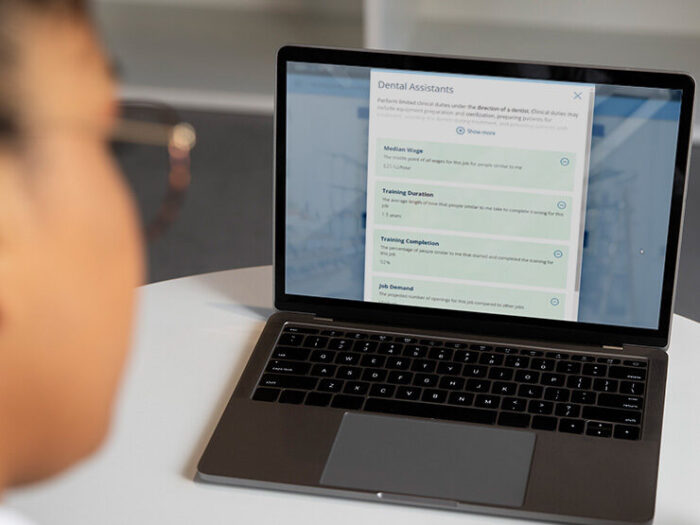
Workforce Recommendation Engine
Achieving better workforce outcomes demands innovative solutions. Tailored specifically for state and local government agencies, Resultant’s Workforce Recommendation Engine is a cutting-edge tool that harnesses P20W data along with the power of machine learning to enhance state workforce services and empower job seekers. Give your agency the power to transform the way you deliver employment, training, and benefit services with a solution unlike any other on the market.
-
Workforce Pell Readiness
As Workforce Pell grants and new accountability requirements emerge, workforce agencies must be prepared to align data, technology, and service delivery. Resultant’s Workforce Pell Readiness offering helps agencies assess their preparedness across key areas, including data integration, AI-enabled career services, and outcomes measurement, while providing clear recommendations to strengthen readiness and maximize impact.
-
Economic Development Agencies
Develop insight into supply and demand to support economic development efforts and encourage local industries to become actively involved in talent development. We help determine your current state, understand your strategy, and develop the tools for supporting talent and growing communities.
-
Nonprofits and Workforce Boards
Get the tools you need to tell a data-driven story about your impact and uncover the details about how your workforce programs support residents and employers. You get a stronger foundation from which to connect employers with talent and talent programs to grow your community.
-
State Workforce Agencies
From IT modernization to advanced analytics, our team builds the foundation you need to leverage longitudinal data to provide residents with improved career pathways. We help you overcome data silos to make fuller use of your data and understand the impact of state-funded workforce programs.
-
Agency and Department Modernization
Integrate data, technology, people, and process to reach the outcomes your teams and citizens need now as you prepare for tomorrow. Complex modernization projects move swiftly with support of expertise, experience, and meticulous change management.
-
Program and Policy Consulting
Evaluate how effectively your existing programs impact citizens. An experienced, objective partner can provide the perspective that improves program reach and resource utilization.
-
Organizational Change Management
Ever completed an upgrade nobody wanted to use? A well-considered plan paired with effective strategies to build trust, create alignment, and address conflicts ensures projects find success and are embraced.


Meet our workforce team.

Sr. Director, Public Sector Consulting

Director, Workforce and Economic Development

Sr. Manager, Workforce and Economic Development
Put End Users First: Vermont’s Data Modernization Approach for Workforce Solutions
Frequently Asked Questions
States use workforce data to make better decisions about funding, program design, policymaking, and service delivery. By identifying which programs lead to higher wages, careers aligned to training and education, stronger job retention, and long-term career growth, agencies can shift resources toward what works and continuously improve outcomes over time.
AI helps workforce agencies move beyond static reporting by identifying patterns across large datasets. It can:
Instead of relying on averages or assumptions, agencies can make decisions based on what has actually worked.
AI only delivers value when it is grounded in:
Without these, AI becomes another disconnected tool rather than a driver of impact.
Moving beyond workforce reporting means using data to improve outcomes, not just describe them.
Traditional reporting shows what happened. Going further means connecting data across systems, tracking long-term outcomes like wage growth and retention, and applying those insights to funding, program design, and service delivery.
The goal moves from better visibility to better results.
Yes. Modern workforce solutions are designed to integrate with existing systems such as unemployment insurance, labor exchange platforms, and education data systems.
This allows states to:
No. Most successful modernization efforts focus on connecting systems rather than replacing them. Integration layers and shared data models allow agencies to unlock value from existing infrastructure.
When implemented effectively, workforce data and AI can:
For example, data-driven recommendations have been shown to increase wages and improve employment outcomes by guiding individuals toward higher-value career paths.
Most organizations begin with an assessment of their current data, systems, and priorities. From there, a phased approach helps identify high-value use cases, prove outcomes quickly, and scale what works across agencies.
Workforce development during historic unemployment—and beyond.
Connect
Insights delivered to your inbox