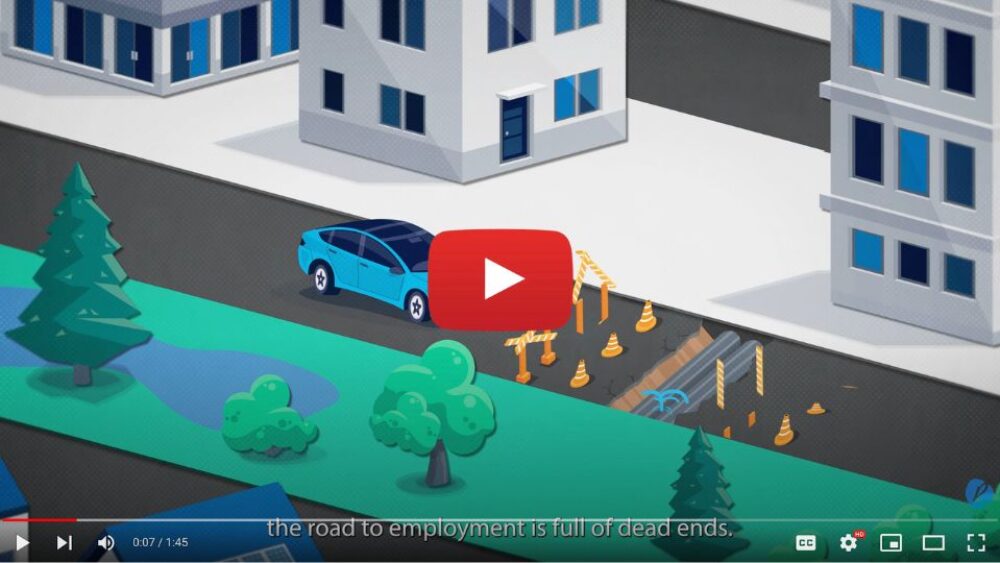
Partner with a team that includes experts who’ve served workforce agencies firsthand.
We’re proud to help organizations thrive, and we’d love to tell you more.
How Workforce Recommendation Engine Turns Data into Actionable Insights
Personalized Pathways for Job Seekers
Job seekers receive personalized pathways to success based on data insights from similarly situated citizens who had positive workforce, training, or education attainment outcomes.
Connecting Employers with the Right Talent
Employer talent demands and job opportunities connect with citizen career path recommendations, resulting in better talent retention over time.
Statewide Upward Mobility
Recommendations help job seekers pursue career trajectories that provide employment stability, upward mobility, and fulfillment impacting economies on the family, community, and state levels.
Workforce Recommendation Engine Empowers Indiana Job Seekers

Why choose Resultant
Workforce Recommendation Engine FAQs
How can AI improve workforce development outcomes?
AI can improve workforce outcomes by identifying pathways linked to higher wages, personalizing career guidance, and helping agencies better understand what works across programs and populations. By shifting from static rules and averages to AI-fueled, data-driven recommendations, states can more effectively support career mobility and long-term economic growth.
What is the Workforce Recommendation Engine?
Resultant’s Workforce Recommendation Engine (WRE) is an AI-enabled career navigation tool that uses state longitudinal data (SLDS) and machine learning to deliver personalized job and associated training recommendations to job seekers based on their work history, wages, and education attainment.
How is Resultant’s Workforce Recommendation Engine different from traditional job search tools?
Unlike standalone job boards or external job search sites, WRE is portable. It can embed directly into a state’s existing unemployment (UI), labor exchange, and SNAP/Medicaid portals and uses comprehensive state data (not just keyword matches) to tailor recommendations based on outcomes of similarly situated users.
Are there case studies of AI in workforce development?
Yes. Early results from Indiana’s WRE implementation (Pivot) show that individuals who pursued the top recommended job experienced an average wage increase of nearly $4 per hour, translating to significant annual income gains.
What metrics define successful workforce development?
Beyond initial job placement, common metrics to measure successful workforce development include wage growth over time, job retention, employment stability, career progression, and reduced reliance on public assistance.
Can Workforce Recommendation Engine integrate with existing state systems?
Yes, it’s designed to integrate seamlessly into existing state portals including UI, workforce, or SNAP/Medicaid systems, meeting citizens where they already interact with government services.
Does using AI in workforce services require legislative or policy changes?
In most cases, no. The Workforce Recommendation Engine can be implemented within existing statutory and policy frameworks because it augments decision-making rather than replacing it. States retain control over how recommendations are presented, governed, and used within their workforce programs. It does require data sharing agreements in place between workforce and education agencies.
How do states use SLDS data for workforce development?
States use state longitudinal data systems (SLDS) to connect education, workforce, and wage records over time. This data helps agencies understand how education and training pathways translate into employment outcomes, identify which programs lead to higher wages, and evaluate the long-term impact of workforce investments.
What data gaps limit workforce policy decisions?
Many states lack visibility into long-term outcomes, cross-agency data connections, and individual career trajectories. Common gaps include limited insight into wage progression, incomplete links between education and employment data, and an inability to see which pathways work for different populations. These gaps make it difficult to design evidence-based policy or allocate funding effectively.
Can states pilot workforce technology before scaling?
Yes. Many states choose to pilot workforce technologies within a specific program, region, or population before expanding statewide. Pilots allow agencies to validate outcomes, assess operational fit, and gather stakeholder feedback while minimizing risk and disruption.
Ready to connect?
Insights delivered to your inbox