



Transcript
This has been generated by AI and optimized by a human.
Jess Carter (00:04):
The power of data is undeniable and unharnessed., it's nothing but chaos.
Various speakers:
The amount of data was crazy.
Can I trust it?
You will waste money.
Held together with duct tape.
Doomed to failure.
Jess Carter (00:16):
This season, we're solving problems in real time to reveal the art of the possible. Making data your ally, using it to lead with confidence and clarity, helping communities and people thrive. This is Data-Driven Leadership, a show by Resultant.
Hey guys, welcome back to Data-Driven Leadership. I'm Jess Carter, and today we're diving into a conversation that is super interesting. When you think about leadership under pressure, you probably imagine high stakes boardrooms, tight deadlines, or maybe a crisis that threatens your company's reputation. But what about leadership when lives are actually on the line? When the decisions you make don't just affect quarterly earnings, but national security. When character isn't just a buzzword in your value statement, but the thing that determines whether people trust you with their safety, that is the world that our guest operated in for two decades.
I first heard Herb Stapleton speak at a Tobias Fellowship event, and I immediately knew that we needed to get him on the podcast. Because here's what struck me, the principles that guided him through those high-consequence environments, the way he thinks about character integrity and decision-making under uncertainty, those aren't just relevant to federal law enforcement. They're exactly what data-driven leaders needed to hear. Today we're not just talking theory. We're getting into the real messy questions. What does integrity actually look like in practice? How do you make decisions when the data's incomplete? Can you coach integrity, or is that something people just have or they don't? And what do you do when someone on your team delivers results, but compromises your values? Let's get into it.
Herb, welcome.
Herb Stapleton (01:51):
Thanks for having me.
Jess Carter (01:52):
Yeah, thanks for being here. I am so excited to talk to you. This is a real moment for me. So your background is incredible. It's so compelling. When I heard you speak at a Tobias leadership event, I immediately knew I wanted to ask you to come on the podcast. I was sitting in a chair thinking, I gotta talk to this guy. So you have taken such an interesting and unique path into leadership. And so I thought I would just start by asking you, I know this is a breezy question, but can you explain a bit of how you got here, what led you to the work that you've done and you're doing today?
Herb Stapleton (02:24):
Yeah, absolutely. I'd love to. I went to law school when I got out of college, not with the intent of becoming an FBI agent, which I would later go on to do, but really just with the idea that I had kind of a commitment to the rule of law and fairness and justice were always things that were kind of interesting to me. And that's what drew me sort to that particular path. And then I started practicing law in the private sector when I got out of law school. I liked that, I loved it. I liked helping clients, I liked all of that stuff. But in that timeframe is when the terrorist attacks of 9/11 2001 happened.
Jess Carter (02:59):
Wow.
Herb Stapleton (03:00):
And I think a lot of people who I would go on to join in an FBI academy class to train to be a special agent, that really kind of changed my focus and motivated me to want to be something part of a purpose a little bit larger than myself. And so I did. When I applied to the FBI, I had no dream that they would actually call me back and say, would you like to come and do this? And I told my wife that I applied to the FBI and I think we both just kind of blew it off as like that will never happen. And of course, all these years later, I had the opportunity to spend 20 years in that line of work before retiring from the FBI a few months ago. And it was just a dream come true. It was everything and nothing that I imagined it would be, I think is the right way to say it. I knew it was going to be an exciting career and I knew it was going to be a fulfilling career, but I just really had no idea where it would all take me.
Jess Carter (03:56):
As someone who innately cared and found interest in the rule of law, fairness, and justice, did your sense of those things evolve, deepen, broaden in those 20 years?
Herb Stapleton (04:08):
Yeah, I think it did. And that's a great question. I had a real interest in all of those things from a conceptual level, almost like a philosophical level
(04:17):
Maybe. But I think what really grew over time was the human aspect of those concepts. How do the way our laws are written apply, how do the way that we enforce those laws, how does that really affect individuals at a human level? And that part, I would say I just became exponentially more focused on trying to help people who were in a position where they couldn't help themselves at that time, whether it be a victim of a crime or sometimes people who are powerless are sort of at the mercy of people who have power. And being an FBI agent is really kind of like a unique opportunity to try to use whatever authority you have to make a difference in people's lives. And so early in my career, I worked a lot of exploitation of minors types of cases. I worked some white collar fraud types of cases.
(05:13):
Really the whole kind of gamut of FBI violations, a couple of kidnapping cases, and those early experiences really ingrained in me kind of a commitment to helping people who needed my help, whoever that might be. One of the things I think was great about the FBI and is great about the FBI is that it is really well suited to investigate the types of things that no one else can investigate or that no one else will investigate. And so when you talk about things like corruption at really high levels of government or in law enforcement, or violations of civil rights laws, those types of things, those are really difficult things to investigate and it's really important to have an independent agency who is out there and sort of well funded and equipped and trained to address those kinds of systemic issues. And that's really my favorite part about the FBI.
Jess Carter (06:22):
One of the things I think is really important is your purview into leadership, and you talk a little, you have some insights into leadership under crisis, and so I'm curious about how do you get, for lack of better words, you can correct me, how do you get promoted into points where you are suddenly allowed to run your first kidnapping case? That's such high stakes. That just feels crazy to me that you would have a first major case like that that you're running, and that you're given the expertise and skills and entrusted with something like that. So help me understand what does leadership development look like in the FBI?
Herb Stapleton (07:01):
The FBI, I think one of the things that they do that sets the FBI apart is they hire people who have already done something. They already have a career. I think when I went through the FBI Academy, the average age of a new agent was about 29 and a half. That age is probably still about the same. I don't know the exact numbers nowadays.
(07:22):
There's a level of maturity. I was a practicing attorney before I became an FBI. There were all kinds of people in my class far more accomplished than I was. Officers from the military, various branches who had served in war zones, people who had been street police officers walking a beat in really dangerous places, people who had held various levels of responsibility in the corporate world. I say all that to say you're sort of expected to take the reins of pretty significant responsibility when you walk out the door of the academy and the academy does some things to prepare you for that, but once you walk out, you have the same badge and gun and credentials as somebody who's been on the job for 20 years. And so you're expected to do that in the right way. I'll tell you that I was incredibly blessed to have an opportunity to work with really good senior experienced agents who taught me how to do things the right way when I got out of the academy.
(08:22):
And so while I may have been the person who was responsible for these really significant investigations even just a few months into my career, I wasn't doing that alone. I was a leader in a certain way, but I wasn't sort of having to stand on an island and do those things. I had people who were very supportive of me, who were good at correcting me when I was going off course and who just really kind of bolstered my confidence and made me believe that I could do those things and more within the FBI. So the FBI is full of leaders. It really is not just people who are in positions of leadership. And when I came to the FBI, I had really zero intention of being in a leadership position. My goal in the FBI was just to be a case agent, was to work investigations for however many years they'd let me stick around and then move on.
(09:13):
As I started to do those things, as I started to get a little bit more responsibility, informal responsibility, I felt like I had some qualities that would potentially lead to me being successful as a leader and to actually helping the organization. The more I got the opportunity to not just work on my own cases, but as I got more experienced and had the opportunity to help other people succeed, that's what really got me kind of hooked on being in FBI leadership. I'll let you in on a secret. It doesn't really pay that much more to be a leader in the FBI than it does to be a case agent or a sort of a frontline agent. And so nobody who really jumps into leadership does it because it's a huge promotion or a huge kind of financial boost. Most of us do it because we think it's a special opportunity to make a difference within the organization and outside.
Jess Carter (10:05):
I mean, it's an interesting concept in and of itself, is if you don't incentivize that, the only way to make more is to be a leader, you might attract more of the right people for leadership.
I don't know how to do this best, so you're going to have to help me. Some of the questions I want to ask you are based on a public speaking event where I heard you walk through a case like an example. And so one of the things I wanted to know is how you would articulate your approach to decision-making when information was incomplete or constantly changing. So as a leader, how did you balance having enough data to make a decision? How did you balance intuition and then recognize the accountability you had to take in those moments?
Herb Stapleton (10:46):
I think that's the toughest part about my FBI role in particular is that you often have to make really high-stakes decisions on incomplete information. And so there's really a balance between moving quickly and knowing when you need to pause to get just a little bit more information before you take actions that can't be undone. One of those things is you put people around you who are different from you. And by that I mean who have different ways of approaching problems. They may be very similar to you in background or all those other things, but if they have a different way of approaching problems, I always found a ton of value in that when you're trying to make decisions with incomplete information. Because I might look at a certain problem set in one way. A really good example of this is in the cyber world.
(11:36):
When I was at the cyber division, I served for a couple of years as an executive in the FBI cyber division. And that role is really kind of a program management strategic partnership role more than anything else. And there are a ton of people of agencies within the government that have different roles in any kind of major cyber incident. And so I had the opportunity to work on some really big ones. I'm looking at a problem like a law enforcement officer. I'm looking at a problem in a way that says, okay, if this major company has suffered a ransomware, for example, our goal here should be to find out who did this and see if we can hold them accountable because that's what law enforcement does. But I was fortunate enough to work around all kinds of other people who had different perspectives on that. Somebody who worked with the DHS CISM might say no, our goal actually needs to be to find what the source of this issue is from a technical standpoint, cut it off, help the company sort of reconstitute itself, and protect against this issue happening in the future. And the FBI has a really big role in trying to accomplish that goal,
(12:44):
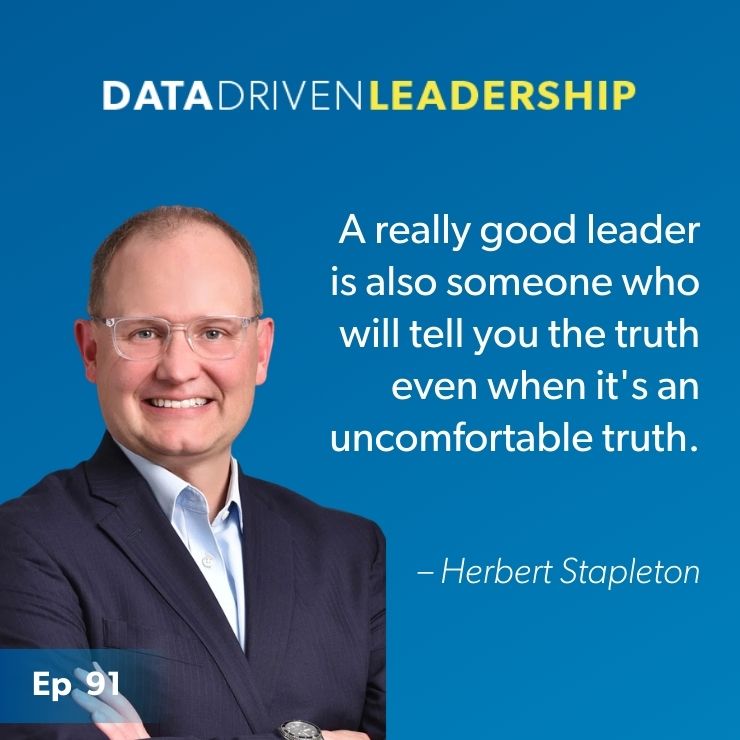
But it's really good to have people who look at it from different angles of the problem and that helps you build out that picture. So I'm a huge advocate of having the right people in the right place, especially when you're trying to make decisions on the fly. The other thing I always wanted, especially, I worked some kind of critical incidents or crises as a frontline agent, just another investigator who was out covering whatever leads needed to be covered. But I also worked some of these types of things as a leader and sometimes as an executive leader. And I think as an executive, you also absolutely need people who will tell you the truth, even when it's an uncomfortable truth, in those settings. And so I really value people who may have been my subordinates on the organizational chart, but who were willing to say, hey, the way you're looking at this is incorrect, or here's what you're missing. And if you're not able to listen to those things in those moments, I think that is where you run the risk of making bad decisions based on incomplete information.
Jess Carter (13:44):
It's a little bit of a mind game to figure out how do you make sure you incentivize that behavior. If you want people to give you the truth, you have to tolerate receiving the truth even when you don't agree or you don't like it. And I think that can be unusual as a leader, too.
Herb Stapleton (14:01):
A former director in the FBI used to talk about a leadership philosophy that always included being both humble and confident,
(14:11):
And that's something that I really took to heart. I think obviously when you're in a position where you have to make decisions, you can't waffle too much. You have to be confident in your decisions and stick to them even when they look difficult sometimes. But having the humility to be able to change course can really be the difference maker. In a way, it's kind of its own kind of confidence to be able to walk in and say, okay, I noticed that we were going to do this, but we have new information and now we've got to adjust. Or, that decision looked right on Tuesday, but it looks wrong on Wednesday. And so being able to do the right thing in those situations can be really hard, but I think it's a make or break kind of quality.
Jess Carter (14:51):
Yes. That sounds pretty substantial actually. Well, so for those of us who are not in life-or-death, for lack of better words, environments or stakes, how would you advise a friend who's in leadership at a corporate firm to apply key lessons that you've learned today? So you talk about some of the information, making the best decisions you can with the information you have, surrounding yourself with people that'll tell you the truth regardless, and that can see things from a different perspective, humility and confidence. Are there any other kind of general guidelines or advice you'd give a friend? Maybe they're not in life-or-death, but you can kind of crosswalk where you've been to where those corporate leaders are.
Herb Stapleton (15:33):
I'm not writing any leadership books anytime soon, but I've had these experiences and times when I've made my own mistakes or seen mistakes made. And I think for me, I was able to distill it down to a few things that I found really, really important. One of the core overarching principles to remember, and there may not be any science behind this, but my experience has been that when you're confronted with a crisis, you actually kind of become more of whoever you already are. You become yourself sort of amplified. And I think that's a really important thing to know about yourself because sometimes you hear people say, oh, Herb is really bad in a crisis, or Jess is really good in a crisis. And I don't know that there are actually people who become better or worse necessarily in a crisis, but whatever their characteristics are, whatever their leadership style is, I think it becomes amplified and you have to have some self-awareness about that.
(16:26):
So if you tend toward being a micromanager, you're going to be more of a micromanager when the chips are all down, when the really important stuff is happening. And so for me, there were a few things that I always tried to do when I was confronted with a crisis. One was simplify the problem. I think this is incredibly important because if you're in a crisis situation and sometimes just even in the day-to-day leadership situation, especially the more responsibility that you have, you're going to have a ton of things coming at you like you're expected to really fulfill a number of roles all simultaneously. And no matter how good you are, you're still only one person. And so you have to be able to take sort of a wide-ranging input and create an output that really simplifies a problem down to what is most important, and maybe even more importantly, what is most important for you as the leader to have as your primary focus.
(17:23):
Right? And that gets really to the next issue, which is about the right people in the right roles. You have to be able to delegate important jobs to people who are in the best position to accomplish them. So if you're a leader in a crisis and you're making every single decision all the way down at the tactical level, my contention is that you're probably not making the best decisions that you can make because no one can really spread themselves that thin. So you got to figure out which ones are the ones that are important for you to make and which ones should you give to the people who are on your team that you picked to do that sort of thing. And then the last one, really the last two, is to remember that wellness in a crisis equals focus. And so if you're not taking care of your people, everybody's going to be in an all hands on deck type of situation.
(18:09):
Everybody's going to be focused and you're not going to need to worry about trying to motivate people, I think, to contribute to that effort, or at least that's the way I felt. If people were there and present and working on the crisis and they cared about the mission, then they were sufficiently dedicated. What you needed to make sure of is that they were in the best sort of mental, emotional and physical state to make the very best decisions that they could. So sometimes that means saying things like, Jess, it's time to go home. You've been here for 16 hours straight and we need you fresh for tomorrow. Sometimes that can mean sort of saving people from themselves and can mean making difficult decisions about bringing someone in to replace someone who needs to be refreshed and creating these schedules and relief and really being present to check on the people.
(18:59):
And I think really all three of those things revolve around good communication. And that's a term I think anybody who sits in this chair and talks to you about leadership is going to say communication is important. Nobody probably in the history of your podcast has ever come on and said, “You know what I think is unimportant? Communication.” But I think it's something that really requires attention in a crisis situation because it's easy to forget about that when you have all these competing interests. It's easy to forget that you have to keep people apprised of what's going on, and you have to take time to listen. And that's how you really ensure that all those other things are going the right way.
Jess Carter (19:35):
Wow, that's a gold mine. As an IT person, I'll shock you by telling you that I've not largely been in charge of any situations where people's lives hang in the balance. I would tell you that I've been a part of heavily adjacent major benefits systems going down where they can't access funds that they need or COVID response for states. And so I can go back and look at times where all of this advice would've been really helpful. So this is a gold mine for people who have not been in a crisis yet. I also sort of giggle a little bit when I'm in a crisis or when my team is in a crisis because I can tell almost immediately if you've had hardship or not yet. There is just some of this shock factor where people who just calm, cool, collected, they get it, they know how to operate. It's like a trauma shorthand where it's like you've seen some things. There is almost a weird skillset you get. Does that make any sense to you?
Herb Stapleton (20:34):
Yes, it does, Jess, and I think you're a hundred percent spot on because I think that through those reps, you understand who you are in a crisis and the people who are the best, it's a stress response. Your body has stress responses that you can't necessarily control. And so I think learning how to live through those, learning how to function through those stress responses is definitely something that you can develop. And I can't speak for everybody, but I certainly had to do that right the first time you get the call that you've got to respond to something and that really important, and it doesn't have to be life or death.
(21:10):
People's livelihoods are very important to them, people's families, those things are all important. And the first time you have to respond to something that's important and is at risk, I think you are naturally going to feel sort of stressed. And I certainly had to learn through experience how to manage that within my own self. Again, I was lucky enough to have people to look to who I think had really mastered it. And I don't know if you did this, but to me, when I was a young person in the workforce kind of trying to figure myself out, I would look to the people around me and say, okay, how is this person seemingly so calm on the outside and you watch how they carry themselves and what their practices are and how they prepare for something like this? That's how I learned how to do it.
Jess Carter (21:56):
Yeah, you will not be surprised that I ended up as a podcast host when I explain this to you. I'm a verbal interrogator. I want to know how people work. I want to know what motivates them, what makes them buy into something, why they behave this way, not that. And so my mentorship was through the roof because I was so curious. I just forced people, right, wrong, or indifferent to mentor me. I'd be like, why are you handling it like that and not like this? Or why are you so calm under pressure? And then you have life teach you some lessons too, where you just figure out how you have to keep existing. And so I think all of it is interesting and exciting, and I've learned to be really gracious with people that maybe haven't had a great deal of crises or traumas in their life when they're older, because I think power you sold and you don't know how to handle. And then I'm like, you know what? Life's been good to you. Okay, good for you. So that's part of it.
Herb Stapleton (22:48):
Yeah, definitely.
Jess Carter (22:49):
So on this podcast, there's a lot of conversations about data, lot of talk about tech, lot of talk about your warehouses and your visualizations and what's AI and what's it going to do. And I do concern myself with, are we focusing on character development and integrity? And is part of the reason we don't because it's so much harder to talk about? It's easier to talk about tools and tech, and there's this confusion where a lot of people have worked with leaders who have low character, low integrity, and sometimes they're still really successful. I dunno, in your experience, how does strong character actually show up in practice and not just in theory? Or how can I tell or size up a potential manager's character? How do I think about that in relationship to leadership? You pick your poison. Those are some of the things I wonder about. And I think Herb might have answers too.
Herb Stapleton (23:46):
Obviously there's a lot we can say about this. From a leadership standpoint, I think the most important element of character is honesty. And I mean that in the most holistic sense of the word, not just responding truthfully to questions you're asked, but being genuine and transparent and authentic,
Jess Carter (24:07):
Forthcoming
Herb Stapleton (24:08):
With the people who, yeah, forthcoming with information with the people who depend on you.
(24:14):
And certainly I would imagine if you polled all the people who I ever worked with, some of them would, I hope most of them, would say that I lived that kind of leadership. And some of them would say that occasionally I failed at it because I’m sure that I did. Because a really, really hard thing to do well in the holistic sense. It's easy to answer a question truthfully. It's sometimes hard to know how forthcoming you should have been or how transparent you should have been or all that kind of stuff. And so I think that is the most important thing. And you're a hundred percent right that, in my opinion, leaders who you might look at the way that they have conducted their own leadership sort of endeavors and say, that might not be the highest-character way to conduct that activity, but they were still successful by a lot of measures.
(25:00):
The measure that I use as a yardstick for whether or not you're leading with character and integrity is sort of voluntary loyalty. I think if you are a leader who leads with high character, I think what you're going to find is the people who are on your teams are ferociously loyal to what you're trying to do. And then the second one is, they're also very forgiving. I think when you lead with that type of character, with full honesty, I think people when you do make mistakes, because you do, you don't find yourself having to be in a situation where you have to try to cover that or deny that you made a mistake or do some of the protests that you're the only person who could have been right about this thing. Honesty sort of breeds honesty there where you can say, look, I think I dropped the ball on that one and let's figure out a way to fix that together.
(25:50):
And the second thing that you mentioned was integrity and integrity is hard to teach. I think it's easy to define, it's what you do when nobody's watching, but it's hard to teach. But I think that does the same thing. I think integrity, it motivates people. I think people are motivated by leaders with integrity. And so being a person who's good at casting vision or creating strategy, those are all really, really good things. But I don't think they go as far to creating motivated and loyal team members as being a person of high character and integrity in the way that you lead.
The other place where I think honesty and integrity are really, really helpful in the leadership role is when you have to deliver bad news. When you have to tell someone that whatever they have done maybe doesn't constitute performing up to standards or you have to tell someone, even though they have performed up to standards, there's not room or money or whatever for whatever it is that they want to do next. Which are some of the hardest, for me, were the hardest things to do in leadership because I like for people to be happy.
(26:51):
I'm kind of a people pleaser at heart. And so then when you have to do these things that are disappointing, it's really hard for someone like me, but I learned through a couple of difficult experiences that trying to soften that blow sometimes in a way that makes it indirect or not completely upfront is not helpful. It's counterproductive. And so being able to be compassionate but also direct and honest, really unlocked something for me that made me, I think, more effective and better overall.
Jess Carter (27:23):
The multi-generational workforce that exists right now I think needs to hear those things. That it's really, really easy as these different generations are stepping into management roles, leadership roles, to try to take the easy way out, try to take just even just the littlest bit of a shortcut is not going to instill the loyalty that you're talking about. That having the hard conversation well matters. And to your point, I don't know that everyone thinks about that, but thinking about, have you ever been given a difficult conversation? And if you look back now, can you understand why that might've been hard? Have a little bit of empathy. Maybe those are people you can leverage to say, help me understand, how do I do that with integrity or character? Because where do you go to learn how do I have a difficult conversation well? You know what I mean? It's not easy.
Herb Stapleton (28:07):
I reflect on that a lot because I think just from a formation standpoint, the conversations that people have with me where they had to tell me ways in which I needed to improve or ways that I was maybe falling short or needed to have development areas, those are so much more memorable in my mind in a good way than the times when people said, you're doing great, keep it up. People like that kind of validation. But just from a formation standpoint, I think those conversations that I received helped me a lot more than anything else. So you try to remember that when you're delivering feedback.
Jess Carter (28:44):
Yeah, I mean, in an interesting way, even the negative feedback, if it's authentic and accurate, it makes you feel seen.
There’s a part of you that's like, oh, yeah, okay, well, that's part of who, if you have the self-awareness to recognize it, there's a bit of gulp, okay, what do I do with that? You're not wrong. Right? So let me ask you this. So you mentioned that you've had some good mentors. I'm thinking about, can integrity be coached or developed? If someone was like, you know what? Maybe I do take the cheap road sometimes if I'm honest with myself, maybe I don't have the hard conversation. If I self-assess for a minute, maybe I have room to improve. How do they get better?
Herb Stapleton (29:26):
That's a great question, and it's not one that I put a ton of thought into, but while you were asking the question, what popped into my mind is that maybe there are two kinds of people, there are people who want that and people who don't want it. And maybe that's kind of what you're looking for, because I think it's unfair to sort of be on the search for the person who perfectly meets that ideal model of integrity in everything they always do. We all have things where we might take a shortcut or we might think that it's okay to withhold some information because it might hurt somebody's feelings. Those are things that we all do. But I do think that there is some value in the idea that you are striving to be a leader or an employee or a person or whatever who models that kind of integrity. And so I think if you're hungry for that, then yes, it probably can be developed and coached. If that's not in your values, then there's probably not a whole lot that can be done about that.
Jess Carter (30:25):
And you've managed people. Yes?
Herb Stapleton (30:27):
Yes.
Jess Carter (30:28):
Okay. So you have gotten good at interrogation, you have a good sense of reading people. So one of the things that I am genuinely quite curious about is when you're having these conversations with a managee, I think that there are judgment calls leaders have to make about, to your point, how forthcoming should I be? And that's based on a judgment call of how open is a managee into receiving feedback? Or even a boss, if you want to create some really high trust, do I trust my boss to be open to receiving feedback, to your point, that they may not like. Do you have indicators that you would share about whether you can trust, because all of this is about human trust. All of this is about do I trust that person and is it appropriate for me to trust that person to be this forthcoming? And sometimes I think people miss either the self-awareness or the read on the room to know if it's, it's like you've been with somebody where they inappropriately overshare too early and you're like, we are not. No. So do you have any guidance on human-to-human, how do you read when it makes sense to be more forthcoming, more trustworthy?
Herb Stapleton (31:41):
A couple of things come to mind. One is, I think self-evaluations are great for this process because I think you can learn a lot from, if someone takes the time to write down from their own perspective what they think their own performance is or how they think they're doing, you can learn a lot from that because there's really two ways that people do it. One way is that they're planting a flag at the highest level of performance so that if you see their performance as something lower than that, they have sort of established the battle lines for how they're going to debate that rating. And the other way is you actually see people who are like, I think I do this really well. I would like to actually get better at this. And they have some kind of action plan for that. I would like to take this class, or I'd like to have an opportunity to have a higher level of responsibility in this area.
(32:38):
When you get a person who evaluates themself in that way, that's a good opening to know that that's probably a person who is actually interested in growth or self-development. I think the other one is, and this is maybe more of a tip for the person who is, it's not as much an indicator of what you see, but one thing I've learned is I try to never, even if I have a judgment or an evaluation of a person, I learned not to give that feedback unless you can actually give them something kind of tangible that addresses that issue. Not just like, I think you need to have better interpersonal skills or whatever. The thing is, if you can't say with some specificity and concreteness, I would like to see you change your behavior from this to this in this particular situation.
Herb Stapleton (33:28):
That’s far more helpful than just kind of saying, I don't think you're very good at this. And so, I always found that those conversations really went into dead ends. But if I could articulate what I would rather see, then those conversations tended to be more productive.
Jess Carter (33:43):
Okay. Yeah, no, this is really good feedback. I'm putting words in your mouth. What I'm still hearing you say as an interrogator is the more you can listen, the more you can tell the language they're using, what they're seeing through their vantage point to understand where to meet them and join them. So it's not so much about talking at, it's more about letting their observations, their reflections, drive where you meet them. Fair?
Herb Stapleton (34:08):
Definitely. Totally fair. Okay. You can continue to put words in my mouth because they were good.
Jess Carter (34:15):
Do you have quick indicators of what would help you assess if someone is of high integrity? Is there a really easy way?
Herb Stapleton (34:22):
I don't think there is an easy path to that because I trust people until they give me a reason not to. And of course, you have to protect your organization in appropriate ways, and you have to get to know someone before you give them certain levels of responsibility and all those things. You have to put guardrails and protections in place. But I tend to be the kind of person that wants to give people opportunities and second opportunities to sort of demonstrate that, what their character is. And I've kind of found most of the time I haven't been let down by that. I think that's my approach is to trust people until I'm given a reason not to. And usually I think people will expose themselves as people who are trustworthy or not over time, if you're on the lookout for it.
Jess Carter (35:04):
Okay. I'm not getting political when I ask you this question. In history, especially the last 20-ish years, we've kind of had this cancel culture, and then we've sort of had some changes to that happening. One of the questions I have for you is, can you recover after you're a leader in a character flaw? After a character lapse? Is it recoverable?
Herb Stapleton (35:27):
So we're challenged in this day and age because every mistake, if you are a public figure or a person of a certain profile, like a mistake will just be publicized all around the world in seconds because of social media and other things. And this is not a commentary on that, it's just the reality of the world that we live in.
My approach to that is to try to be genuine about shortcomings. I think that's the only way to go about it. And people are smarter than we sometimes give them credit for in the sense that I think people can usually tell when a person is authentic in sort of being sorry. And when a person is just trying to regain some position or regain the glory that they formerly had before the fall. And so I guess I'm an optimist. At the end of the day, I'm an optimist, and I think in the end, authenticity wins out.
Jess Carter (36:22):
Yeah, I think I'm here for that. It's such a delight to talk to you. If people want to follow you and just keep up with what you're doing, what's the best way to do that?
Herb Stapleton (36:30):
Yeah, so LinkedIn is the best way. I'm old, so I'm not a big social media poster, but I've tried to be better about that. And so articles that I write or things that I'm saying or doing are frequently posted on LinkedIn. And then also at densmore.com, you can find new things that I and other people in my firm are putting out there for our clients and just anybody who might need to read about our topics.
Jess Carter (36:53):
Thank you guys for listening. I'm your host, Jess Carter. Please don't forget to follow the Data-Driven Leadership wherever you get your podcast. And rate and review, letting us know how these topics are transforming your business. We can't wait for you to join us on the next episode.
Insights delivered to your inbox